Biblical Propitiation: Understanding the Atoning Sacrifice
In biblical theology, the concept commonly translated as propitiation refers to the act by which God’s righteous wrath against sin is appeased and divine justice is satisfied. It is a foundational idea that threads together the Old Testament sacrificial system with the work of Christ in the New Testament. This article explores biblical propitiation from its earliest biblical roots, through its development in the life of Israel, to its culmination in the person and work of Jesus Christ, the atoning sacrifice for humanity. By tracing the language, symbols, and meanings of propitiation, readers can gain a clearer understanding of how this doctrine shapes Christian faith, worship, and everyday living.
Defining Propitiation in Biblical Terms
The word propitiation emerges from biblical languages with a specific theological aim: to turn away divine wrath and to secure favor for those who trust in the mercy of God. In Scripture, propitiation is closely tied to the problem of sin, the holiness of God, and the need for reconciliation between God and people.
Important terms to know include:
Propitiation: the action or means by which God’s anger toward sin is appeased, resulting in restored fellowship and access to God.
Atonement (often used interchangeably with propitiation in popular usage): the broad idea of making things right between God and humans, which can include both appeasement of wrath and the removal of the guilt of sin.
Expiation: often used to describe the removal or covering of sin, sometimes contrasted with propitiation depending on theological emphasis.
Substitution: a mode of atonement where another stands in the place of the sinner, bearing the penalty due to sin.
Mercy seat (kapporet): the lid of the Ark in the tabernacle/temple where atonement was made on the Day of Atonement.
Across the biblical narrative, propitiation is not merely a theoretical concept. It points to a personal and cosmic reality: God’s justice must be satisfied, yet his love and mercy are not withheld from those who place their trust in him. The biblical authors frame propitiation as both a past event—accomplished in a definite moment in history—and a present reality that shapes the life of faith.
Propitiation in the Old Testament: Shadows of the Atoning Sacrifice
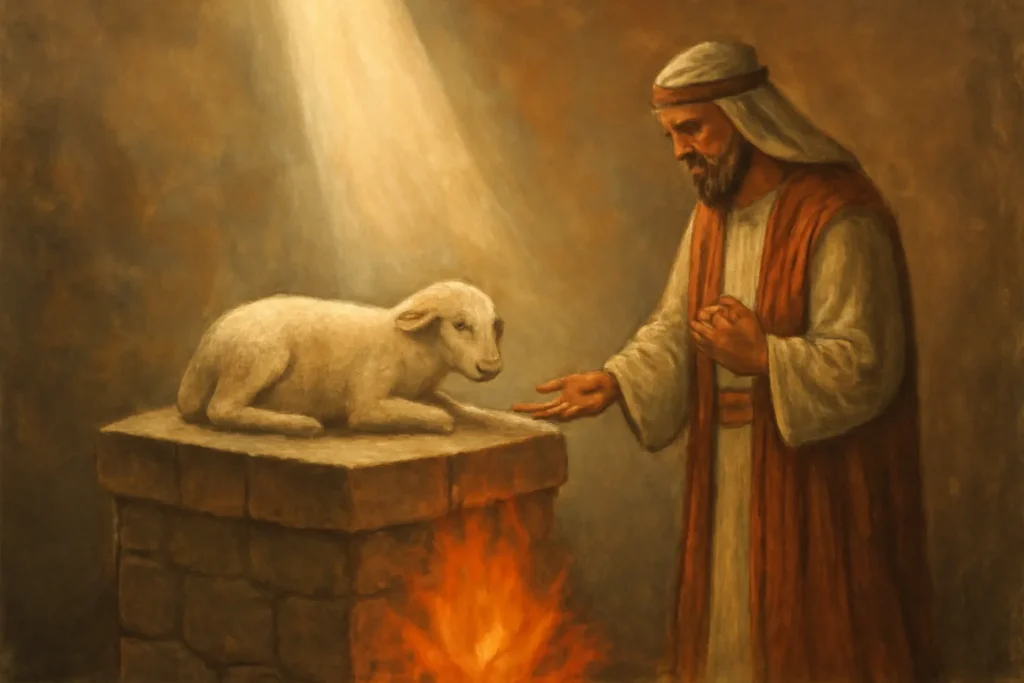
The Old Testament presents the propitiatory system as a visible, ritualized way of teaching Israel about sin, judgment, mercy, and covenant faithfulness. While the sacrifices themselves did not remove sin in a final sense, they pointed forward to the ultimate solution that would be realized in the coming Messiah.
The worship practices of Israel included a variety of offerings, each with its own symbolic message about sin and fellowship with God. Some of the major categories were:
Burnt offerings: presented as total consecration and devotion to God, signaling adoration and surrender.
Sin offerings and guilt offerings: specifically addressing sin, guilt, and the need for cleansing from ceremonial impurity and violation of God's law.
Peace offerings (fellowship offerings): celebrated communion with God and shared feasting with the community, illustrating restored relationship.
Sin bearing and substitution themes: in some offerings, the animal's life stood in for the sinner, prefiguring a greater substitutionary work to come.
The sacrificial system was bound to the holiness of God and the purity required to approach him. Each sacrifice carried with it the pedagogy of propitiation: the shedding of blood for the remission of sins (Hebrews makes this connection explicit in the New Covenant’s antetype and fulfillment).
The Day of Atonement and the Mercy Seat
One of the clearest expressions of propitiation in the Old Testament is found in the annual Day of Atonement, described in Leviticus 16. On this day, the high priest entered the Most Holy Place once a year to perform rites intended to cover sin for the people as a whole.
The high priest offered sacrifices, including a sin offering for himself and a sin offering for the people.
Two goats were used: one was sacrificed, and the other (the scapegoat) bore the people's transgressions away, symbolizing the removal of guilt.
The mercy seat—the cover of the Ark—was the place where the blood of the sacrifices was sprinkled, signifying the appeasement of God’s wrath and the establishment of a renewed, holy relationship with the community.
The Day of Atonement thus served as a powerful picture of propitiation: in the law's economy, a high priest stood in for the people, blood was shed, and the righteousness of God was upheld even as mercy was shown. In Christian interpretation, this annual rite is read as a type, or foreshadowing, of the ultimate and sufficient atonement that would come in Jesus Christ.
Propitiation in the New Testament: The Ultimate Sacrifice
The New Testament presents the work of Jesus as the focal point of propitiation. The death, resurrection, and exaltation of Christ are described as the supreme act by which God’s wrath is appeased and humanity is offered reconciliation. The language is concrete, theological, and deeply pastoral, inviting believers to trust in the gathered witness of the gospel.
The Person as Propitiation
Several New Testament texts describe Jesus as the propitiation or the atoning sacrifice for sins.
Romans 3:25: Jesus is presented as God’s propitiation through faith in his blood, a declaration of righteousness for the remission of sins.
1 John 2:2: Jesus is the propitiation for our sins, not for ours only but also for the sins of the whole world, highlighting the universal scope of the atonement in the hinge of God’s grace.
1 John 4:10: “This is love: not that we loved God, but that he loved us and sent his Son to be the atoning sacrifice for our sins.”
Hebrews 2:17: Jesus “has become a merciful and faithful high priest in service to God, to make propitiation for the sins of the people.”
The New Testament thus casts Jesus’ mission as the climactic fulfillment of the propitiation narrative, where divine justice and divine mercy meet in the person and work of Christ. The cross is not simply a moral example; it is the persuasive act by which God’s wrath is turned aside and human beings are reconciled to their Creator.
Theological Perspectives on Propitiation
Throughout Christian history, theologians have explored how the work of Christ relates to the concept of propitiation. The central claim remains that God’s holiness requires justice against sin, and his love provides a means by which justice can be satisfied without eliminating the possibility for grace to flourish.
The most widely taught interpretation in many Christian traditions is the penal substitutionary atonement (PSA). In this view:
Christ bears the penalty for sin in the sinner’s place, satisfying the demands of divine justice.
Jesus’ death is the propitiatory sacrifice that reconciles humanity to God by removing the barrier of guilt and condemnation.
The emphasis is both on the substitution (the sinner’s place is taken) and the propitiation (the wrath due to sin is appeased).
Advocates of PSA often connect it with the language of sacrifice, the cross, and the resurrection as a coherent, historically grounded explanation of how God can be both just and merciful toward sinners.
Other Theological Conceptions
Not all traditions emphasize penal substitution in the same way. Other prominent views include:
Christus Victor: emphasizes Christ’s victory over the powers of sin and death, with propitiation embedded within the victory narrative rather than framed purely as penal satisfaction.
Moral Influence: emphasizes the transforming effect of Christ’s life and death on the believer, with propitiation understood in terms of awakening love and trust rather than a juridical transaction.
Ransom Theories: view Jesus’ death as paying a price to Satan or cosmic forces to secure freedom for humanity, with propitiation tied to the broader drama of salvation history.
Each of these frameworks seeks to capture the biblical sense that God’s holiness, love, and justice are harmonized in the work of Christ. Regardless of the exact emphasis, the key claim is that Christ’s atoning death satisfies divine demands and makes possible restored relationship with God.
How Propitiation Works in Practice
To move from theory to practice, readers can consider how the doctrine of propitiation shapes faith, worship, and life. Here are several angles:
Blood, Sacrifice, and Covenant Renewal
The blood of Christ is presented in the New Testament as the means by which forgiveness and reconciliation are secured.
The cross is interpreted as the fulcrum of the new covenant, through which God’s gracious promise is fulfilled with a renewed heart and spirit for believers.
The language of atonement in pastoral letters invites believers to hear the gospel as both declaration and invitation: God has acted to make enemies into family members and sons and daughters of God.
Access to God and Corporate Worship
Propitiation removes the barrier of sin, enabling believers to approach God with confidence, not fear (Hebrews 10:19–22).
In corporate worship, the remembrance of the atoning sacrifice shapes confessional prayers, baptismal motifs, and the Lord’s Supper as ongoing memorials of God’s mercy.
Embodied in Christian ethics, the truth of propitiation motivates acts of justice, mercy, and peacemaking as grateful responses to God’s mercy.
Assurance and Mission
For many believers, the doctrine of propitiation brings assurance that God’s throne is a place of mercy for those who trust in Christ, not a mere cosmic courtroom.
As the gospel extends to all people, the concept of universal access to atonement (through faith) shapes missions and evangelism, inviting people from every nation to receive reconciliation with God.
Propitiation and Reconciliation: A Seamless Connection
Propitiation and reconciliation are closely linked but distinct in emphasis. Propitiation focuses on appeasing God’s wrath and satisfying divine justice; reconciliation emphasizes restoring broken relationships and restored fellowship between God and humanity.
In biblical language, the work of Christ accomplishes both: propitiation for sin and reconciliation with God.
The result is robust pastoral implications: believers are not merely forgiven; they are drawn near to God and invited into an active, intimate relationship with their Creator.
Christians often reflect that the mercy of God is not opposed to his justice. Propitiation, in the gospel, is the means by which both justice and mercy converge for the transformation of individuals and the renewal of creation.
Contemporary Implications: Living in Light of Propitiation
Understanding the doctrine of propitiation has practical consequences for how Christians live, worship, and witness today.
Worship: The gospel-centered worship of today should give glory to God for the atoning sacrifice and respond with awe, gratitude, and obedience.
Ethics: Propitiation underwrites a robust ethic grounded in holiness, justice, and mercy, since God’s own character is revealed in the cross.
Pastoral care: Assurance of acceptance with God based on Christ’s propitiation can strengthen comfort for the weary, hope for the anxious, and gospel confidence for those wrestling with guilt.
Evangelism: The message that Jesus is the propitiation for sins provides a compelling invitation: forgiveness, reconciliation, and restored relationship with God are available through faith in him.
Common Questions about Propitiation
Readers often have questions about how the biblical concept of propitiation relates to faith, practice, and other theological ideas. Here are some frequent inquiries with concise responses.
What is the difference between propitiation and expiation? Propitiation emphasizes appeasing God’s wrath and restoring the relationship through a suitable sacrifice; expiation focuses more on removing guilt or the penalty itself. In many biblical contexts, the two ideas are closely related and are often discussed together as aspects of the atonement.
Why did God require sacrifices in the Old Testament? Sacrifices taught Israel about sin, guilt, and holiness, and they prepared the people for the coming, definitive propitiation in Christ. They also modeled faith, dependence, and repentance as the ways of approaching God.
Is propitiation only about punishment of Jesus on the cross? While penal substitutionary language is central in many traditions, propitiation also encompasses the broader reality that Christ’s death appeases God’s holy anger and secures access to God for humanity, paving the way for reconciliation and new life.
How does propitiation affect believers today? It shapes confidence in God’s mercy, motivates gratitude and worship, and fosters ethical living that reflects God’s holiness and love.
Historical Reflections: Propitiation in the History of Christian Thought
Across centuries, Christian theologians have engaged with the concept of propitiation, refining language and doctrine in light of scriptural witness and doctrinal debates. The central thread remains: God’s holiness and love converge in the cross, where the atoning sacrifice demonstrates both God’s justice and his grace.
In meditating on the biblical propitiation, readers can appreciate its unity with the broader story of salvation: creation, fall, promise, covenant, exile, redemption, and new creation. The idea of propitiation helps believers situate the cross within the larger drama of God’s redemptive purpose for the world and invites response through faith, worship, and mission.
Closing Reflections on the Atoning Sacrifice
The atoning sacrifice described in Scripture is not merely a historical phenomenon; it is a living reality that shapes how Christians understand God, themselves, and their neighbors. Propitiation implies that God’s response to sin is serious, but that mercy is supremely displayed in the person and work of Jesus Christ. It calls believers to live with reverence for God’s holiness, faith in the gospel, and a compassionate mission to share the good news of reconciliation with a world in need.
In sum, biblical propitiation—whether referred to as propitiation, the atoning sacrifice, or the work of Christ as the ultimate sacrifice—invites readers into a story of divine justice and divine mercy meeting at the cross. It is a call to trust in Christ, to worship him with whole hearts, and to embody the reconciliation that God has achieved for humanity. May this understanding deepen faith, enrich worship, and guide action as communities of believers seek to live out the implications of the gospel in every dimension of life.









Leave a Reply