The Jesus Final Week Timeline presents a structured, day-by-day view of Holy Week, tracing the events from the triumphal entry into Jerusalem to the celebration of the Resurrection. This timeline of Jesus’ last week—also called the Final Week of Jesus’ Life—offers a chronological framework that helps readers understand the sequence, the people involved, and the theological significance of each moment. While different Gospel accounts (Matthew, Mark, Luke, and John) highlight different details, the overall arc remains coherent: entry, teaching, conflict, surrender, sacrifice, and hope. This article provides a thorough, definitive day-by-day guide to Holy Week, with clear sections for each day, cross-references to Gospel sources, and notes on variations across the Gospel accounts.
Overview: Why the Final Week Timeline Is Important
In Christian tradition, the final week timeline is not just a sequence of events; it is a narrative arc that culminates in the most consequential moment in Christian faith—the Resurrection. Reading the week day by day helps readers grasp how each day builds on the previous one: from joyous proclamation on Palm Sunday to deep confession in the garden, to the public confrontation in the temple, to the private hours of suffering, and finally to the public proclamation of Easter morning. The word-by-word chronology, while imperfect in places due to variations among the Gospels, still offers a reliable scaffold for study, preaching, and personal reflection. This article explores the Jesus final week timeline through a practical, accessible lens, while noting where the sources disagree or emphasize different facets of the story.
As you read, you’ll encounter a few recurring motifs that echo throughout the timeline of Jesus’ last week: authority and hypocrisy, the kingdom of God unveiled in unexpected ways, the atoning sacrifice prepared for the world, and the triumph of God’s plan as embodied in the Resurrection. Whether you study this as a historical account, liturgical memory, or a devotional guide, the final week timeline invites careful attention to both the events themselves and their enduring meaning.
Sunday: Palm Sunday – The Entrance and Early Teachings
On the opening day of Holy Week, the city of Jerusalem fills with pilgrims and expectation. The timeline of Jesus’ last week formally begins with the dramatic entry that the Gospel writers name the Triumphal Entry into the holy city. The crowd spreads cloaks and palm branches, shouting phrases that recognize Jesus as a messianic figure, Hosanna to the Son of David, and acknowledgement of his role as teacher and prophet.
Triumphal entry into Jerusalem: Jesus rides a donkey’s colt into the city, fulfilling Old Testament imagery and signaling a different kind of kingship—one marked by humility rather than conquest.
Arrival at the Temple: Early appearances in the temple precincts begin to set up the tension between Jesus’ authority and the religious leadership he challenges.
Teaching and proclamation: Throughout the day, Jesus teaches and answers questions, signaling that this week will culminate in a decisive confrontation.
Variations across the Gospels: Each Gospel offers unique details. For example, John’s account emphasizes the cleansing of the temple and the subsequent teaching, while Matthew, Mark, and Luke place the emphasis on the crowd’s reception and Jesus’ authority in the temple area.
Readers should note that the Sunday events are the starting point of the final week timeline, but the exact sequence and emphasis differ slightly among Matthew, Mark, Luke, and John. For instance, the official cleansing of the temple and Jesus’ provocative statements about the temple’s future are tied closely to the timeframe of the entire week and set the tone for opposition in the days ahead.
Monday: Cleansing the Temple and Teachings in the Temple Courts
In many traditional reconstructions of the Jesus final week timeline, Monday features a decisive act of purification and a series of pointed teachings. The actions of Cleansing the Temple become a symbolic stand against commercialized religious activity and a prophetic challenge to the authorities. In parallel, Jesus engages in public debates and teachings that reveal the direction this week is taking.
Cleansing the Temple: Jesus drives out those who were selling goods and overturns the tables of money changers, arguing that the temple should be a house of prayer for all nations rather than a marketplace.
Fig tree episode: Some gospel accounts place the cursing of the fig tree in this period, symbolizing judgment and the appearance of spiritual fruitfulness. The two stories together highlight a theme of faithfulness and the consequences of barren religiosity.
Teachings on authority: Jesus responds to questions about his authority with parables and statements that expose the religious leaders’ understanding of the law and their own authority.
Quiet controversy: The Monday action—though dramatic in emphasis—serves to escalate the conflict with the religious authorities, setting up Tuesday’s confrontations and the escalating tension toward betrayal and arrest.
Those studying this final week timeline should note how Monday’s temple action frames the rest of the week: it is a public repudiation of a corrupt system and a declaration that God’s house is meant for worship rather than commerce. The responses of the authorities foreshadow the political and religious dimensions of Thursday’s and Friday’s events.
Tuesday: Controversies, Parables, and Olivet Discourse
The timeline of Jesus’ last week on Tuesday emphasizes debate, parables, and prophetic teaching. This day is marked by engagement with opponents—chief priests, scribes, and elders—who challenge Jesus’ authority and interpret his parables as indictments of their leadership. The afternoon and evening portions often center on the Olivet Discourse, where Jesus speaks about the end times, watchfulness, and the coming kingdom.
Debates about authority: The religious leaders question Jesus’ authority, and he answers with a question-and-answer approach that exposes their insincerity and fear of loss of control.
Parables and teachings: Jesus shares parables about faithful stewardship, accountability, and the inevitability of judgment—lessons that align with the themes of the final week.
Olivet Discourse: In some Gospel traditions, the Olivet Discourse is delivered on this day, offering a prophetic perspective on future events and the coming suffering, justice, and the ultimate triumph of God.
Confrontations and plots: The ongoing plotlines with the religious authorities intensify, and the seeds of betrayal are taking root in the narrative that unfolds across the week.
Cross-Gospel Nuances
In the timeline of Jesus’ final week, Tuesday’s material is widely studied for its emphasis on authority, judgment, and eschatology. While all four Gospels cover material from this period, Matthew and Mark tend to foreground public confrontation and parabolic instruction, whereas Luke highlights humility and mercy in different encounters. John’s perspective often emphasizes private dialogues and the growing tension with Jewish leaders, offering a complementary angle to the same events.
Wednesday: A Day of Quiet, Plotting, and Betrayal Preparations
Wednesday in the canonical narrative is frequently described as a day of relative quiet or plan-making among those who oppose Jesus. Some traditions treat this day as a period of continued plotting by the authorities, with Judas Iscariot negotiating his betrayal. Others interpret it as a day of contemplation and spiritual focus, as Jesus spends time with close followers in expectation of the events to come. The Jesus final week timeline recognizes this day as a hinge point where the momentum moves decisively toward the arrest and crucifixion.
Political and religious plotting: The plot to arrest Jesus grows more concrete as authorities seek a way to seize him without causing an uproar among the people.
Judas’ betrayal arrangements: In some textual traditions, Judas’ decision to betray Jesus is solidified around this period, setting in motion the imminent arrest.
Private teachings and prayers: Jesus may spend time in prayer or private teaching with his closest followers, preparing them for the upheaval ahead.
Gospel variations: The details of Wednesday vary more across the Gospels than do prior days, reflecting the different emphases of each author on the events to come and the nature of betrayal and distance from the crowds.
Reflection on the Quiet Before the Tempest
This day invites readers to reflect on the theme of silent preparation before crisis. The stillness is often read as a counterpoint to the public drama of the coming days, inviting a contemplative response from believers and readers who engage with the final week timeline as a journey toward the Passion.
Thursday: Holy Thursday – The Last Supper, Foot-Washing, and Betrayal
Thursday is central to the final week timeline because it contains the Last Supper, the institution of the Eucharist, the ritual of foot-washing, and the deep trial that leads to arrest in the Garden of Gethsemane. This day is often called Maundy Thursday in Christian tradition, signaling a mandate to love one another as Jesus commands his disciples.
The Last Supper: Jesus shares a meal with his disciples, breaks bread, and shares the cup, inaugurating what many traditions call the Eucharist or Communion.
Foot-washing: Demonstrating humility and servanthood, Jesus washes his disciples’ feet, teaching them the model of leadership through service.
Betrayal foreseen or initiated: In the Gospels, Jesus identifies the betrayer at the table or soon after, depending on the Gospel account, signaling the imminent arrest.
Gethsemane vigil: After the meal, Jesus prays earnestly in the Garden of Gethsemane, sweating drops of blood as he wrestles with the weight of the coming crucifixion and fulfills prophecy and redemptive purposes.
Arrest in Gethsemane: Judas arrives with soldiers and betrays Jesus with a kiss, and the arrest marks the transition from the public ministry to the Passion narrative.
Thursday’s events are rich in theological meaning: the institution of the Lord’s Supper is a ritual that churches recall in communion rites; the foot-washing offers a concrete model of servant leadership; and the agony in Gethsemane underscores Jesus’ human experience of fear, obedience, and the will to fulfill God’s redemptive plan.
Friday: Good Friday – The Passion and Crucifixion
Friday is the pivotal day of the Jesus final week timeline as the Passion reaches its climax. The day unfolds in a sequence of trials and public encounters, followed by condemnation, crucifixion, and death. The framed narrative emphasizes the suffering endured for humanity and the public execution that becomes the focal point of Christian belief about atonement and salvation.
Trials before Jewish authorities: Jesus faces interrogation by the Jewish leaders who accuse him and seek capital punishment, a charge they present to the Roman authorities.
Trial before Pilate: Accusations reach the Roman governor, who, influenced by political pressures and crowd sentiment, sentences Jesus to crucifixion.
Crucifixion: The method of execution, carried out on a hill of Golgotha, is the central event of this day and a turning point in the narrative.
Death and burial: Jesus dies on the cross, his body is taken down, and he is laid in a tomb owned by Joseph of Arimathea.
Fulfillment of prophecy: The accounts often frame the events as fulfillments of Old Testament prophecies and the necessary steps toward salvation history.
Theological Emphasis
In this part of the timeline of Jesus’ last week, the emphasis is on the sacrifice and its meaning. Christians reflect on the Passion as the moment when suffering is united with divine love, and the power of God’s plan is revealed through weakness, offering a path to reconciliation with God. The exact order of events varies slightly across Matthew, Mark, Luke, and John, but the core components—trial, crucifixion, death, and entombment—consistently anchor Friday’s place in Holy Week.
Saturday: Holy Saturday – Silence, Burial, and the Waiting
Saturday in the final week timeline is often described as a Sabbath of quiet stillness. The tomb is sealed, the disciples withdraw, and a vigil of waiting falls over those who believed in Jesus’ mission. The narrative emphasizes the sense of anticipation that characterizes the period between death and resurrection.
Guarded tomb: The authorities seal the tomb and place guards to prevent theft or tampering with the body.
Disciples’ fear and withdrawal: The followers experience confusion, fear, and scattering as the weight of Friday’s events sinks in.
Theological anticipation: While outwardly silent, many theologians read this day as a necessary pause—the stillness before the dawn of Easter morning and the public proclamation of new life.
Variations in tradition: Some traditions emphasize the descent into hell or the proclamation of victory over sin as part of the broader Passion narrative, but the canonical emphasis remains on the tomb’s sealing and the waiting period.
Practical Reflection
In the study of the Jesus final week timeline, Saturday invites believers to reflect on loss, hope, and the endurance of faith in the face of apparent tragedy. It is a moment to remember the human dimensions of the story and to prepare for the transformative moment of Easter Sunday.
Sunday: Resurrection Day – The Empty Tomb and Apostolic Witness
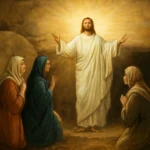
The week concludes with the triumph of the Resurrection, often referred to as Easter Sunday in Christian liturgies. The timeline of Jesus’ last week ends with an extraordinary sequence of discoveries, appearances, and the commission that follows. The discovery of the empty tomb and the initial appearances to Mary Magdalene and the disciples form the heart of the Easter message, signaling that death is conquered and that life in God’s kingdom is offered to all who believe.
The empty tomb: Women followers discover that Jesus’ body is not in the tomb, and the space is found to be empty, inviting awe, confusion, and faith questions.
Resurrection appearances: Jesus appears to individuals and groups, offering peace, blessing, and a commissioning for mission.
Commission to the disciples: The resurrected Jesus gives clear instructions to make disciples of all nations, teaching them to observe all that he commanded.
Post-resurrection proclamation: The early church begins to proclaim the good news and to understand the meaning of Jesus’ life, death, and resurrection within the framework of God’s redemptive plan.
In the definitive day-by-day guide to Holy Week, Easter morning and appearances are described with differences among Matthew, Mark, Luke, and John. Some accounts emphasize appearances to individuals (Mary Magdalene, then Peter), while others emphasize group appearances and the sending of the disciples into the world. The final chapter of this timeline acknowledges that the precise order and emphasis may differ by Gospel writer, but all converge on the presence of the risen Christ and the call to witness to the world.
Variations and Harmonies: How the Gospels Present the Final Week
Readers exploring the Jesus final week timeline will notice that Matthew, Mark, Luke, and John each highlight different moments and arrange events with their own literary aims. Some key points to consider when comparing the accounts include:
Timing of the Last Supper: The Last Supper’s placement in the week varies by Gospel, with some framing it as the final meal before the Passion and others presenting it as a special observance tied to the festival calendar.
Foot-washing vs. Eucharist: John emphasizes foot-washing as a model of service, while the Synoptic Gospels emphasize the institution of the Eucharist as a communal practice.
The Temple episode: The cleansing of the Temple is described in all three Synoptic Gospels, but its placement relative to other events shows subtle differences.
Gethsemane and betrayal: The arrest and betrayal are consistent themes, but the exact sequence and emphasis can differ among accounts.
Resurrection appearances: The post-resurrection appearances vary in order and detail, yet they consistently affirm the central claim of the risen Christ.
Because of these differences, the study of the timeline of Jesus’ last week benefits from comparing Gospel narratives side by side. A harmonized view can help readers see the unity of the overarching story while appreciating each author’s distinctive voice and purpose.
Practical Ways to Use the Final Week Timeline
Personal devotion: Use the day-by-day format for a week-long devotional, meditating on the events and their meanings for faith and life.
Educational study: Teach a class or lead a study using the definitive week as the backbone, with side-by-side readings from the four Gospels to highlight differences and similarities.
Liturgical planning: Churches often structure Holy Week services around this timeline, with readings and songs tied to the events of each day.
Artistic and literary exploration: Writers and artists can use the final week timeline as a framework for reflections, narratives, or visual depictions that explore themes of anticipation, confrontation, sacrifice, and hope.
In all these uses, the central aim is not merely to recount events, but to engage with their meanings: the revelation of God’s love, the reframing of leadership and authority, the call to discipleship, and the victory of life over death that lies at the heart of the Resurrection narrative.
Conclusion: The Enduring Significance of the Final Week Timeline
The Final Week Timeline of Jesus’ life is more than a chronological list of events. It is a structured path that invites readers into a profound encounter with the themes of humility, sacrifice, justice, faith, and transformation. From the triumphal entry on Palm Sunday to the glorious proclamation of Easter, this day-by-day guide to Holy Week helps believers and students understand how each day contributes to the larger story of redemption. Whether you approach it as a historical reconstruction, a devotional itinerary, or a theological map, the Jesus final week timeline remains a powerful gateway into the central mysteries of Christian faith.
As you reflect on the timeline of Jesus’ last week, consider how each moment speaks to your life today: a call to humble service, a challenge to the powers that oppose mercy, a reminder that suffering can yield new life, and a promise that the story continues in your own faith journey through the Resurrection.
Appendix: Quick Reference Timeline (At-a-Glance)
Below is a concise, non-exhaustive reference to the day-by-day flow of the final week narrative. Use this as a quick guide to the main events commonly associated with each day in the Christian tradition.
Sunday – Palm Sunday: Triumphal entry; temple visits; early teaching.
Monday – Cleansing the Temple; temple teachings; fruitless fig tree episode (symbolic).
Tuesday – Controversies about authority; parables; Olivet Discourse (eschatology).
Wednesday – Quiet day of plotting and preparation for the betrayal (varying emphasis among Gospels).
Thursday – Last Supper; foot-washing; betrayal (Judas); Gethsemane; arrest.
Friday – Trials; crucifixion; death; burial.
Saturday – Holy Saturday: tomb sealed; waiting and reflection.